
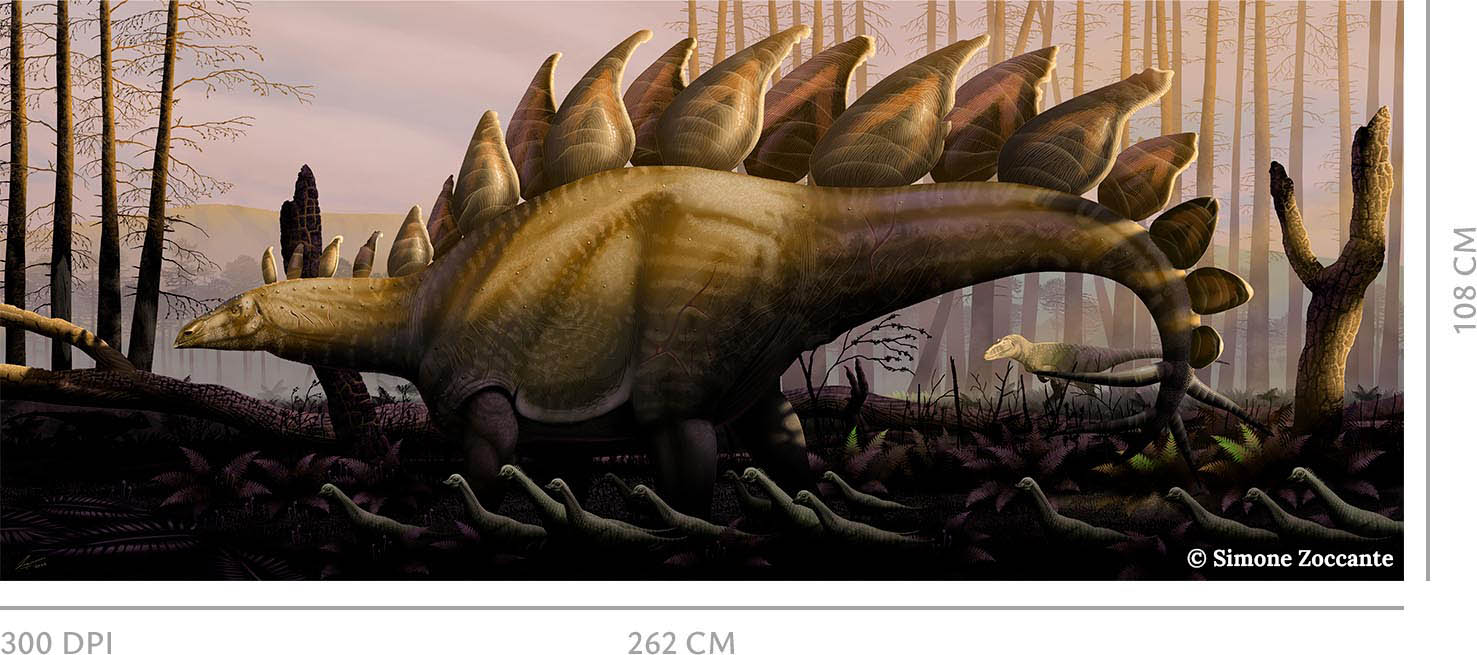
This painting represents a glimpse of a catastrophic scene: a great forest fire. The communicative aim of this work is less descriptive and didactic, and more narrative, as it portrays the consequences of the fire on both the environment and the animals that inhabit it.
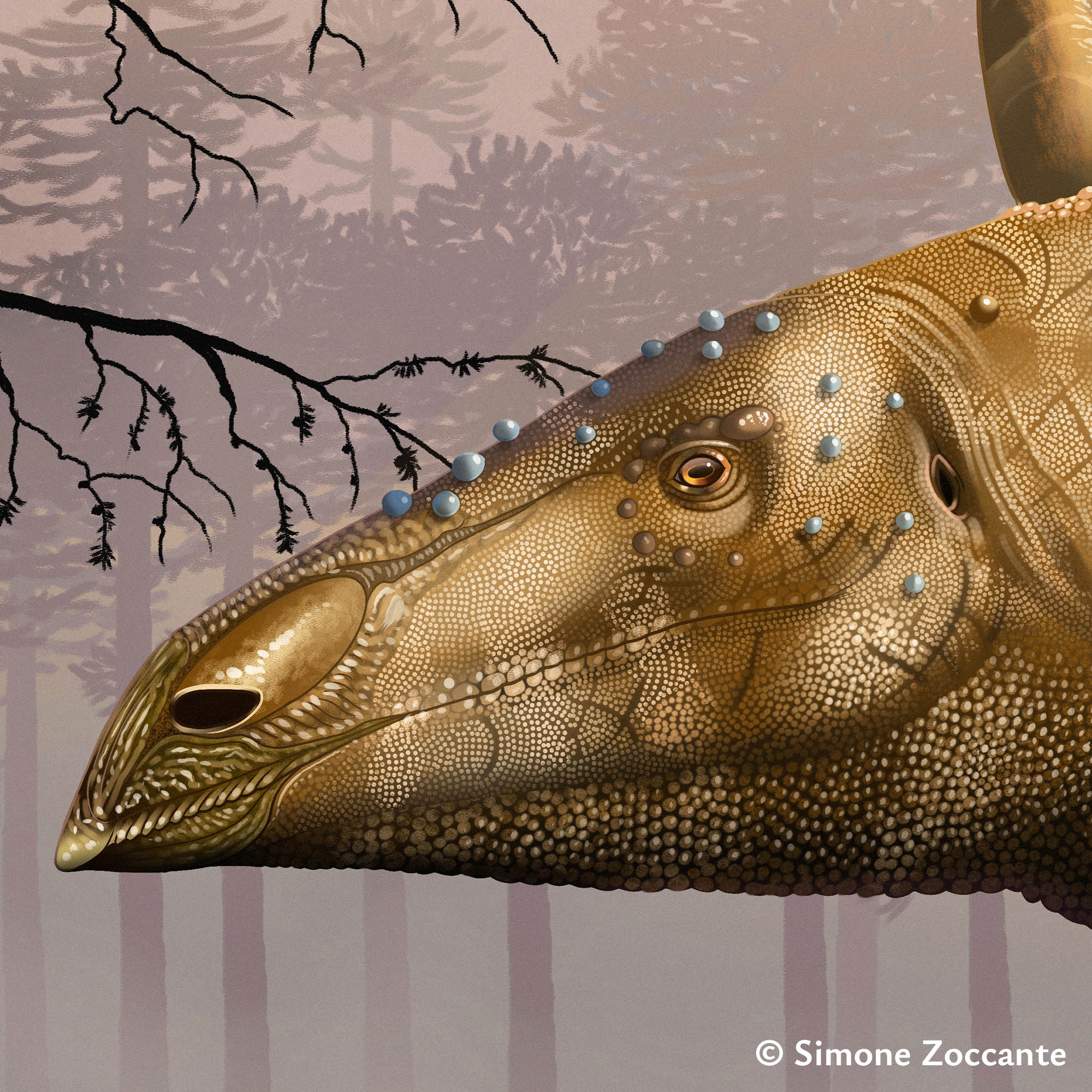
We can observe the burn wounds on the thigh and tail of Stegosaurus, which force it to move with a limping gait. We can see the helpless and disoriented swarming of juvenile Brachiosaurus that have gathered around the large herbivorous dinosaur, as well as the stealthy and opportunistic roaming of Torvosaurus in the background, patrolling the area in search of an easy meal.
Nature appears dimmed, and the limited palette, concentrated in shades of grey, black, and orange, conveys the drama and violence of the great fire that has just taken place.
This work was awarded the prestigious John Lanzendorf–National Geographic Paleoart Prize 2-D Art at the 85th Annual Meeting of the SVP (Society of Vertebrate Paleontology), held in 2025 in Birmingham (UK).

Formation: Morrison Formation, USA
Period represented: Jurassic (Kimmeridgian–Tithonian), 156-146 Mya
Animal species represented: Stegosaurus ungulatus, Nanosaurus agilis, Brachiosaurus altithorax, Torvosaurus tanneri
THE FISHERS’ BAY
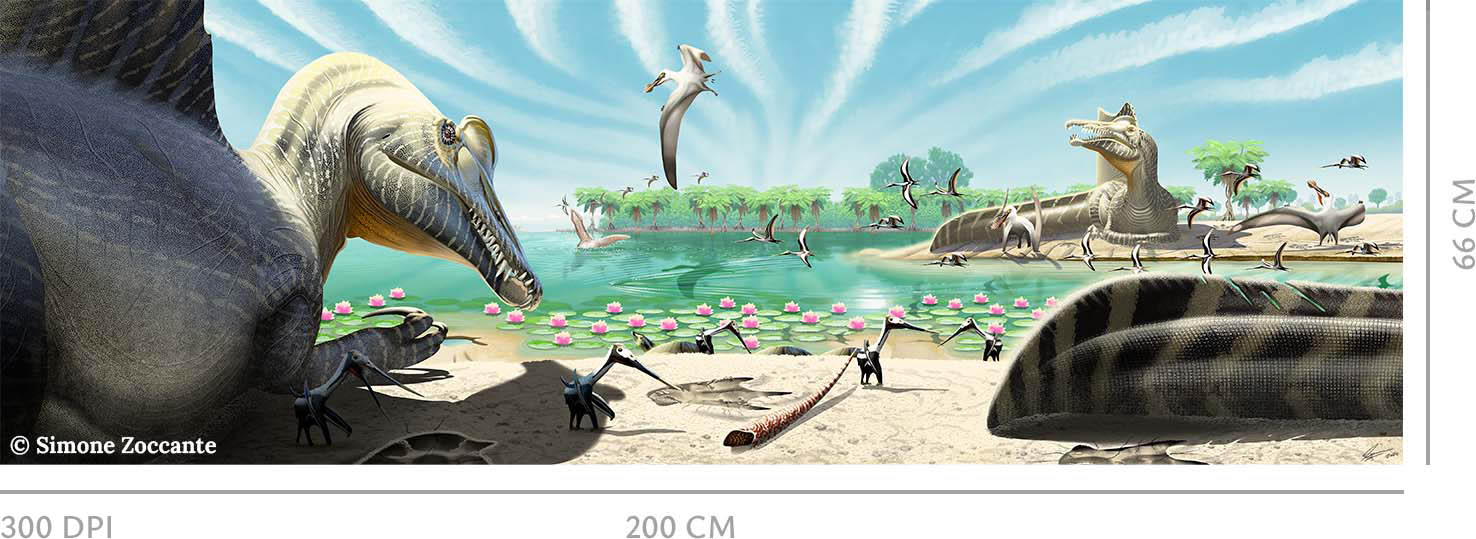
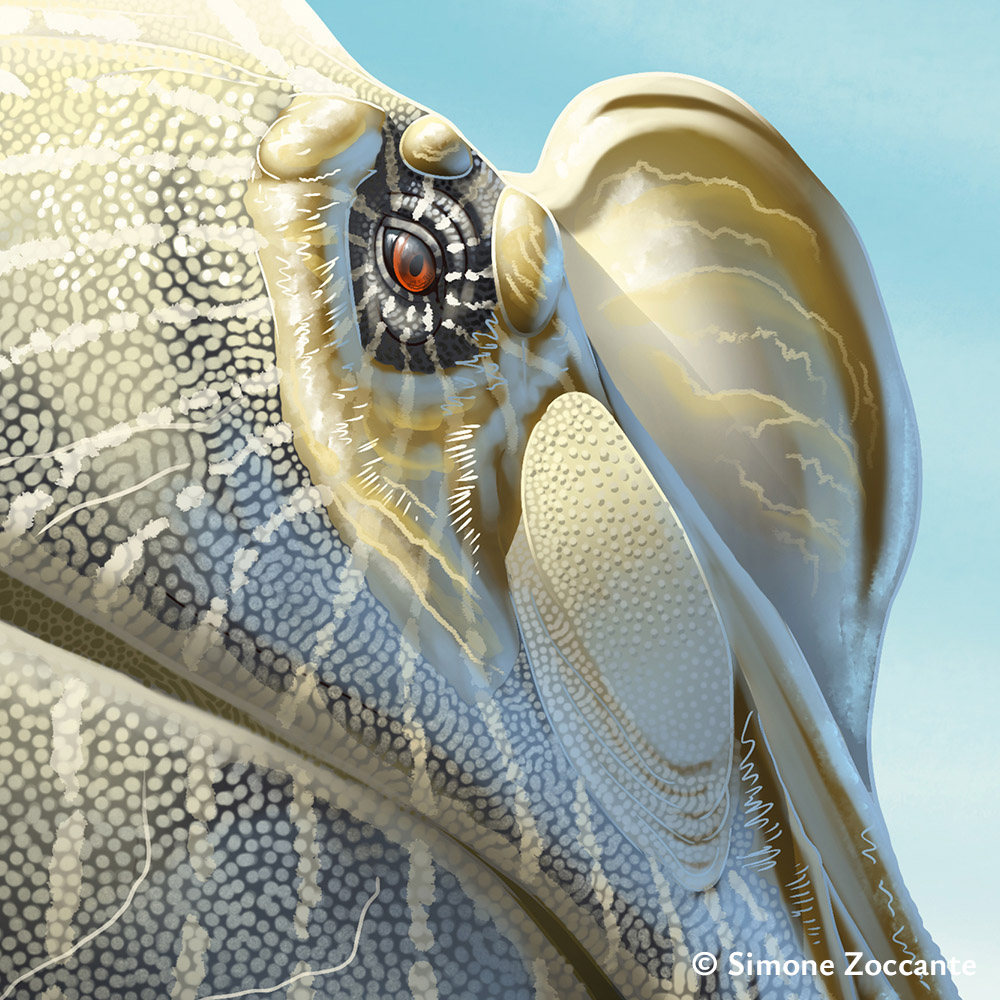
Large carnivorous dinosaurs are often portrayed as fearsome, bloodthirsty predators. However, when observing scenes from modern wildlife, we notice that moments associated with hunting are often far less frequent than those devoted to rest; crocodiles being a clear example. With this perspective in mind, I conceived this work as a scene of repose, in which the “fishermen of the Kem Kem”, Spinosaurus and various types of pterosaurs, take time to rest or to glide serenely beneath the rays of the warm sun.
The composition also includes a small episode of predation: a plesiosaur of the genus Leptocleidus attempting to snatch in mid-air a Leptostomia, subtly reminding the viewer that in nature even moments of tranquility may at any time give rise to acts of predation.

Formation: Kem Kem Beds, Morocco
Period represented: Cretaceous (Cenomanian), 100-95 Mya
Animal species represented: Spinosaurus aegyptiacus, Leptostomia begaaensis, Coloborhynchus sp., Galianemys sp., Baculites sp., Leptocleidus sp.
PALEOLOXODON FALCONERI FAUNAL COMPLEX
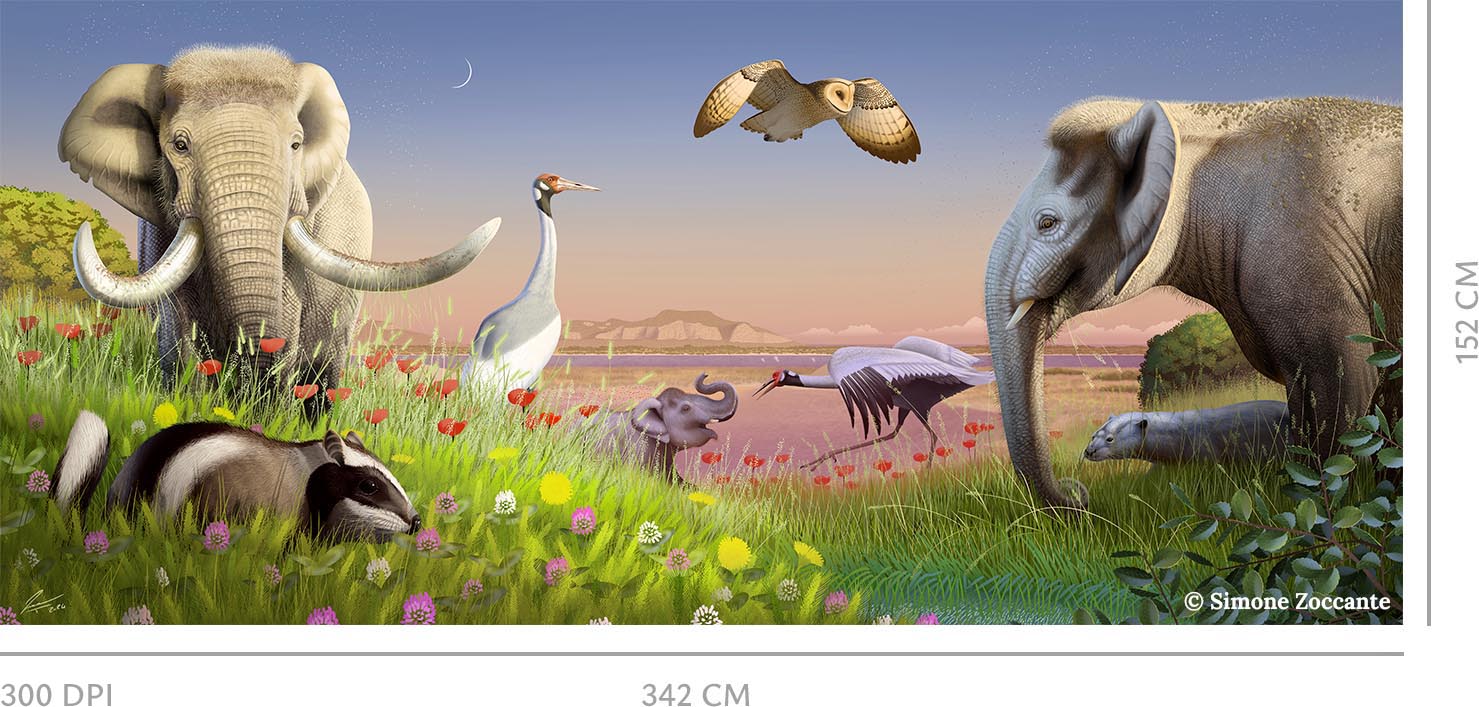
During the Pleistocene, the islands of the Mediterranean hosted truly remarkable faunas. In Sicily, in particular, between 500,000 and 200,000 years ago, a walk in nature would have felt like stepping into a world turned upside down. One would have encountered elephants the size of wild boars, dormice as large as domestic cats, cranes tall enough to meet our gaze eye to eye, and barn owls as large as eagles. These are some of the species depicted in this plate dedicated to the faunal assemblage of Palaeoloxodon falconeri, the Sicilian dwarf elephant.
Observing the painting evokes a sense of vertigo, highlighting the unusual proportions between the various faunal elements and their environmental context, producing an almost dreamlike impression.
This painting was created for the study “Feeding strategies of the Pleistocene insular dwarf elephants Palaeoloxodon falconeri and Palaeoloxodon mnaidriensis from Sicily (Italy) | September 2025, Italy”, which investigates the relationships between diet and environment in Sicilian Palaeoloxodon.


Formation: Puntali and Za Minica Caves, Sicily (Italy)
Period represented: Middle Pleistocene (Chibanian), 500-200 Kya
Animal species represented: Palaeoloxodon falconeri, Grus melitensis, Tyto mourerchauvireae, Leithia melitensis, Lutraeximia trinacriae
PALEOLOXODON MNAIDRIENSIS FAUNAL COMPLEX
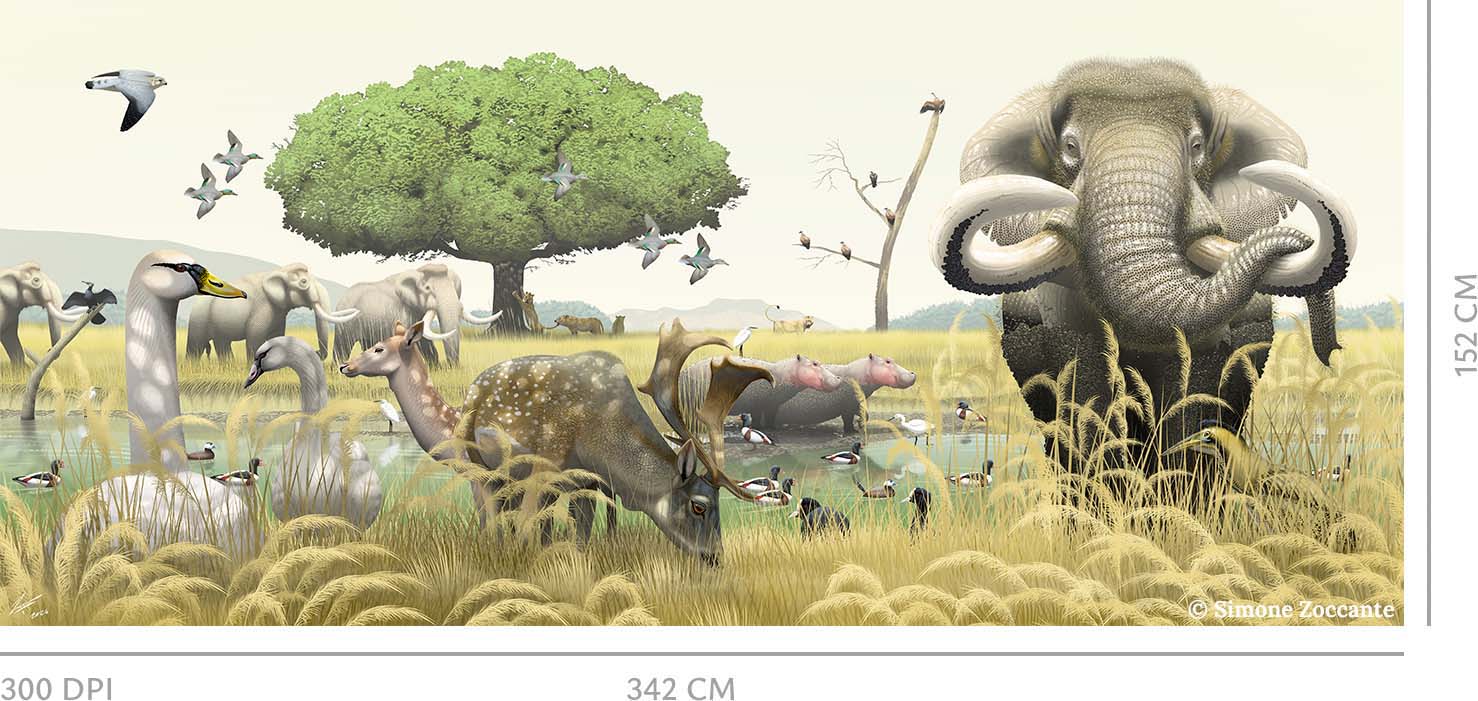
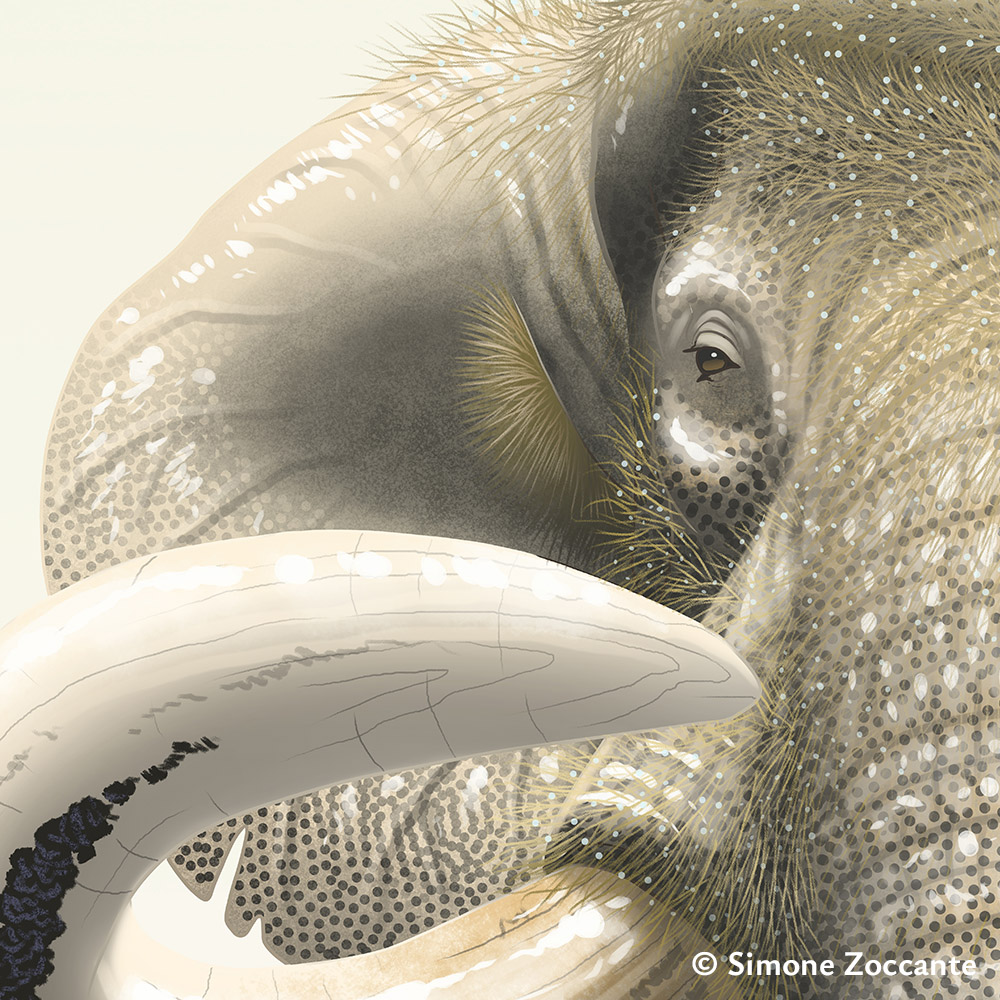
Second work dedicated to the faunas of Sicily during the Middle–Late Pleistocene. Compared to the plate focused on the faunal assemblage of Palaeoloxodon falconeri, this second work immediately reveals a far richer and more diverse array of animal species, at first glance appearing as a curious blend of typically European and more specifically African faunas.
During the second half of the Pleistocene, Sicily was inhabited by a second species of African elephants, Palaeoloxodon mnaidriensis, which coexisted with animals such as dwarf hippos, giant swans, cave lions, cave hyenas, and bison.
On closer inspection, the plate also includes several species still present today in the Mediterranean basin, predominantly birds, including the coot, the bittern, the cormorant, the white-headed duck, the little egret and the imperial eagle.
This painting was created for the study “Feeding strategies of the Pleistocene insular dwarf elephants Palaeoloxodon falconeri and Palaeoloxodon mnaidriensis from Sicily (Italy) | September 2025, Italy”, which investigates the relationships between diet and environment in Sicilian Palaeoloxodon.

Formation: Boccadifalco and Luparello caves, Sicily (Italy)
Period represented: Middle–Late Pleistocene (Chibanian–Late Pleistocene), 200-20 Kya
Animal species represented: Palaeoloxodon mnaidriensis, Dama carburangelensis, Cygnus falconeri, Botaurus stellaris, Fulica atra, Hippopotamus pentlandi, Tadorna tadorna, Oxyura leucocephala, Egretta garzetta, Anas crecca, Phalacrocorax carbo, Falco columbarius, Panthera spelaea, Aquila heliaca, Gyps melitensis
I LEFT MY HEART IN PIKERMI
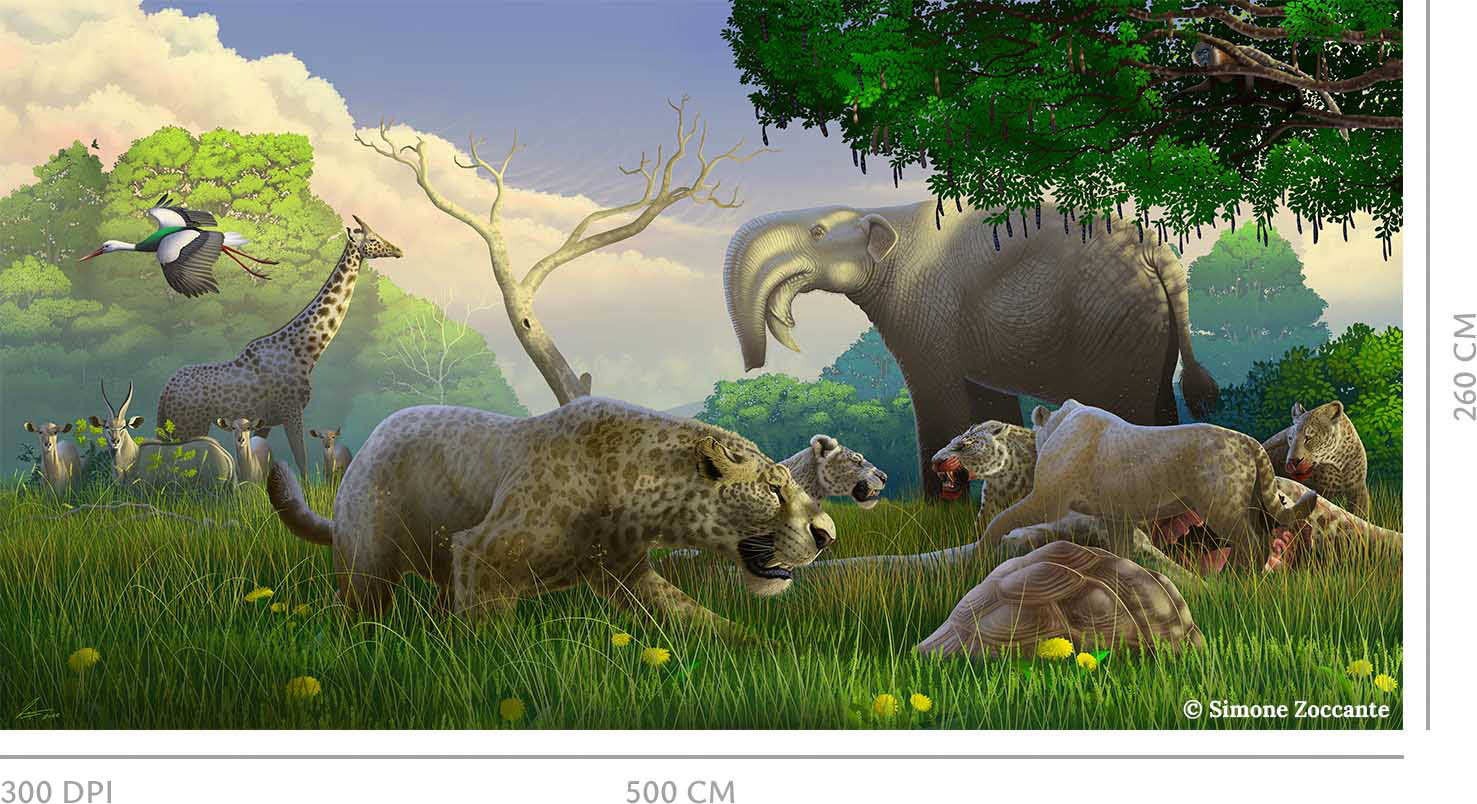
This 5-meter-long digital mural depicts a glimpse of the environment and fauna of late Miocene Greece. Within it, one can observe some of the most emblematic species of that period, such as the saber-toothed felid Amphimachairodus and the proboscidean Deinotherium. During the Miocene, Europe, and consequently the Hellenic Peninsula, was inhabited by animal species that would be considered unusual by today’s standards, including giraffes, elephants, large felids, giant tortoises and rhinoceros; an age of titans reminiscent of the figures celebrated in Greek mythology.
The painting was designed to be large and immersive, allowing the viewer to lose themselves both visually and mentally within the environment, coming face to face with some of the foreground subjects depicted at life size.
The extinct Pikermi ecosystem is particularly significant for understanding the climatic and environmental changes we are experiencing in the current historical moment.
This work was awarded in the Lourinhã Paleoart Prize, one of the most prestigious and long-standing paleoart competitions, now in its 10th edition. I participated in the 2022 edition with I Left My Heart in Pikermi. The painting received an Honorable Mention.
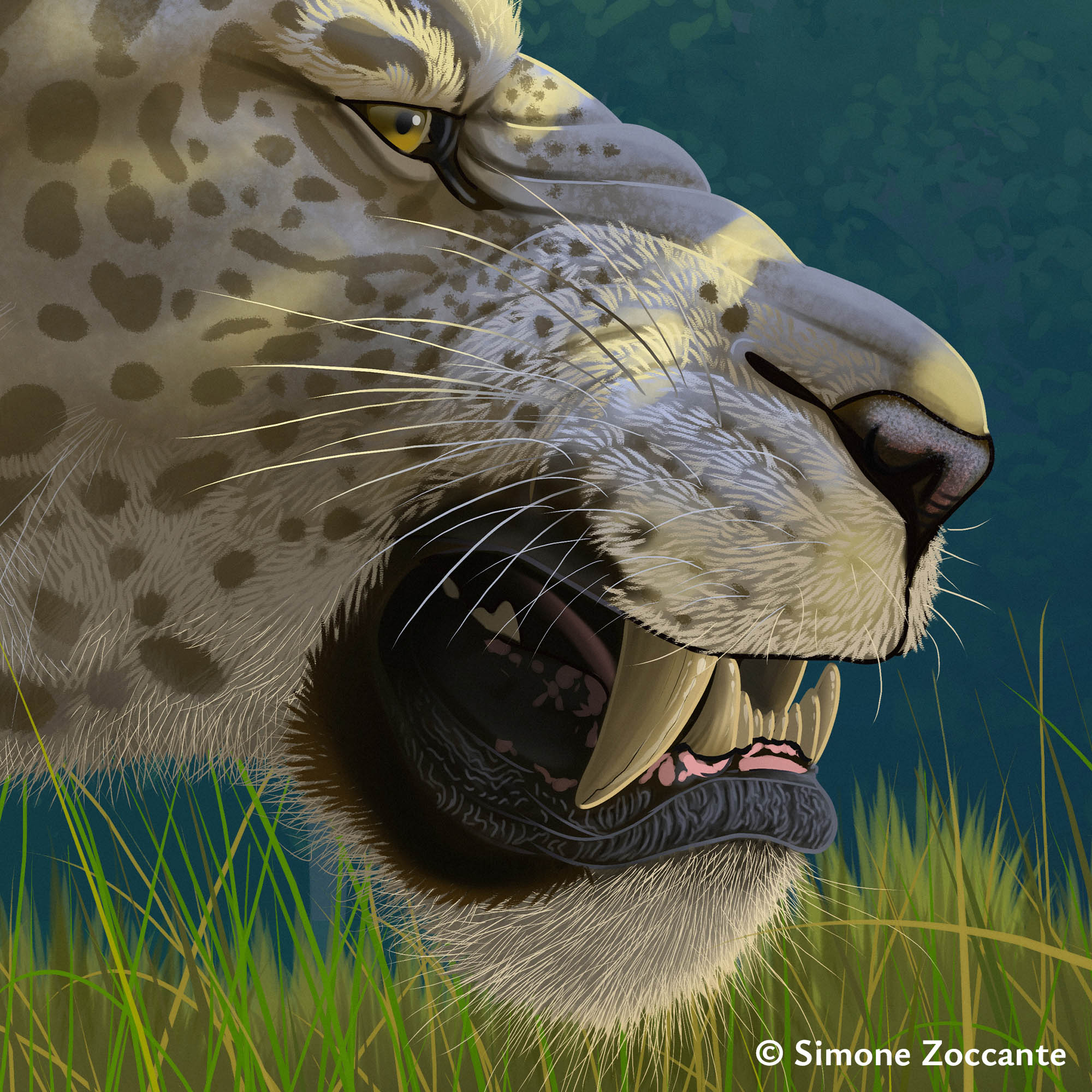

Formation: Pikermi, Greece
Period represented: Miocene (Turolian), 9-5,3 Mya
Animal species represented: Amphimachairodus giganteus, Bohlinia attica, Deinotherium proavum, Miotragocerus gaudryi, Titanochelon sp., Ciconya gaudryi, Mesopithecus pentelicus
TROPHIC DANCE
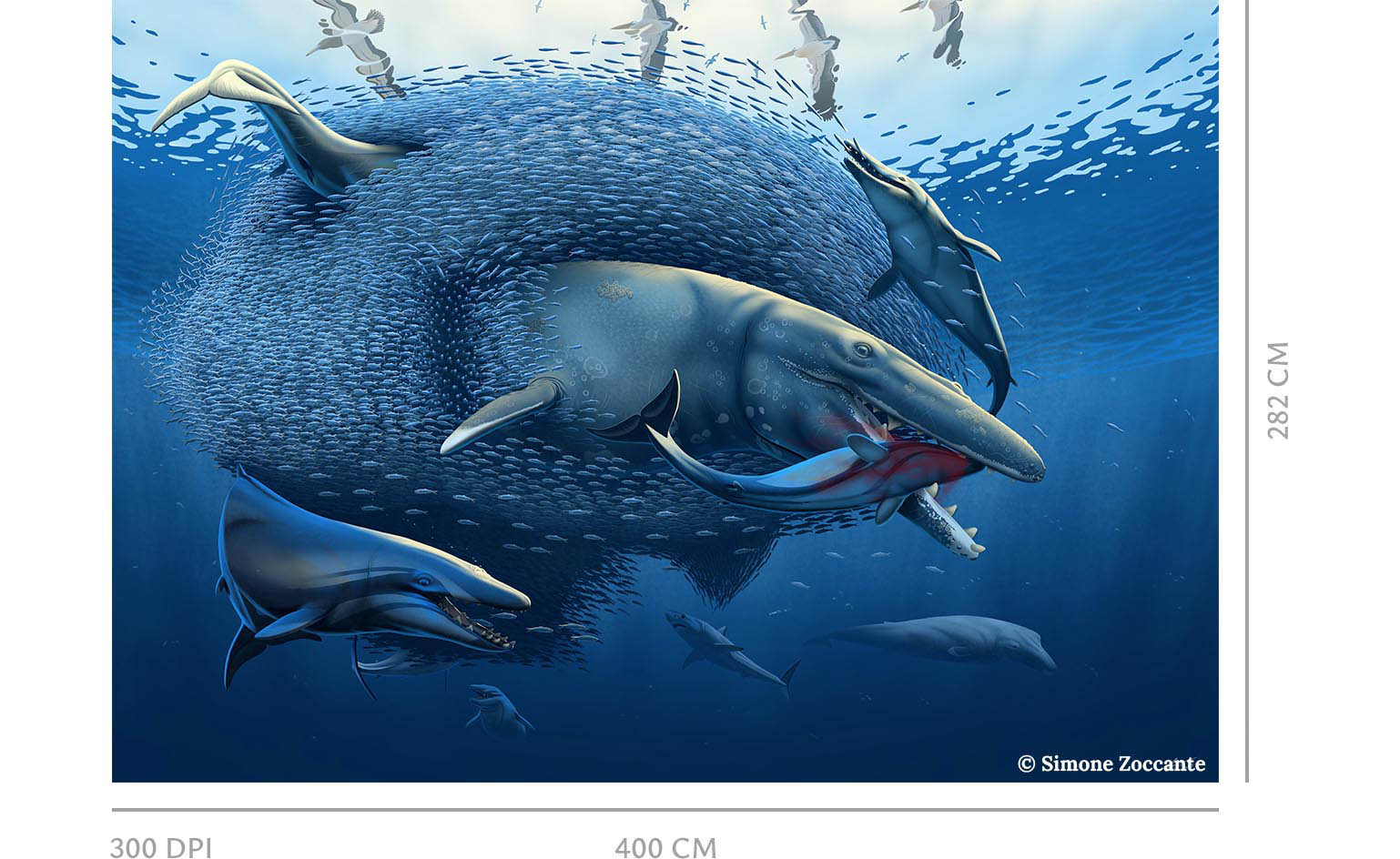
This 4-meter-long mural depicts a scene of marine life from the Late Eocene. We are in Egypt, where today lies the Fayyum oasis, and 40 million years ago, this area was open sea. The waters were not particularly deep, although the fossil record indicates a fauna that included animals of considerable size.
In the painting, we can observe a scene of what naturalists call a “feeding frenzy,” a phenomenon in which a group of predators gathers to feed frantically around a concentrated food resource. The resource in question is a large school of fish of the genus Sardinella, which has attracted numerous marine predators such as the sharks Machrorhizodus, ancient whales like Dorudon atrox, and pelagic birds including Eopelecanus and Pelagornithidae.
While the sharks and whales feast on the fish, a large individual of Basilosaurus isis, a formidable predatory archaeocete, successfully captures a young Dorudon, caught by surprise while engaged in its own hunting activity. This predation episode is not a product of imagination but a reconstruction of an event evidenced in the fossil record. Indeed, skulls of young Dorudon showing bite marks from Basilosaurus have been discovered, and remains of Dorudon have also been found within the fossilized stomach contents of these large cetaceans.
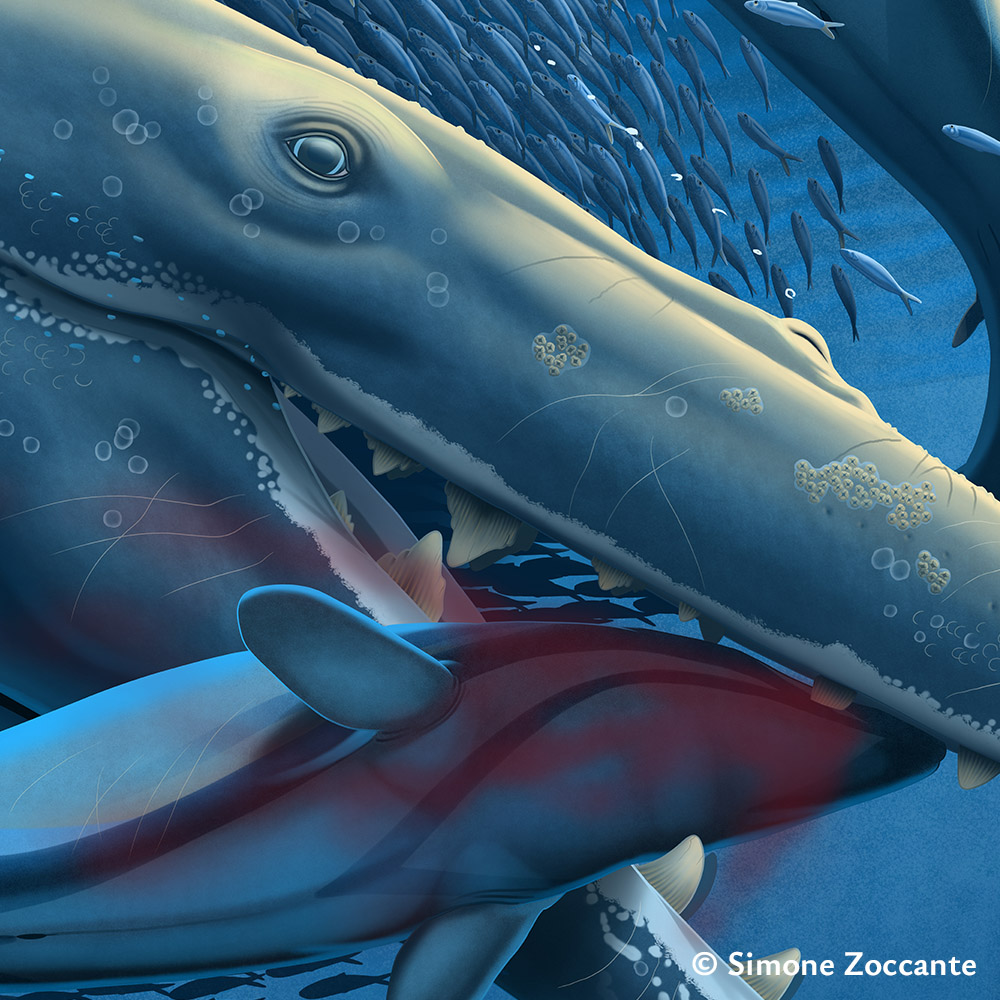

Formation: Birket Qarun Formation, Egypt
Period represented: Eocene (Bartonian–Priabonian)
Animal species represented: Basilosaurus isis, Dorudon atrox, Macrorhizodus praecursor, Sardinella sp., Eopelecanus aegyptiacus, Pelagornitidae sp.
ENCOUNTER UNDER THE RAIN
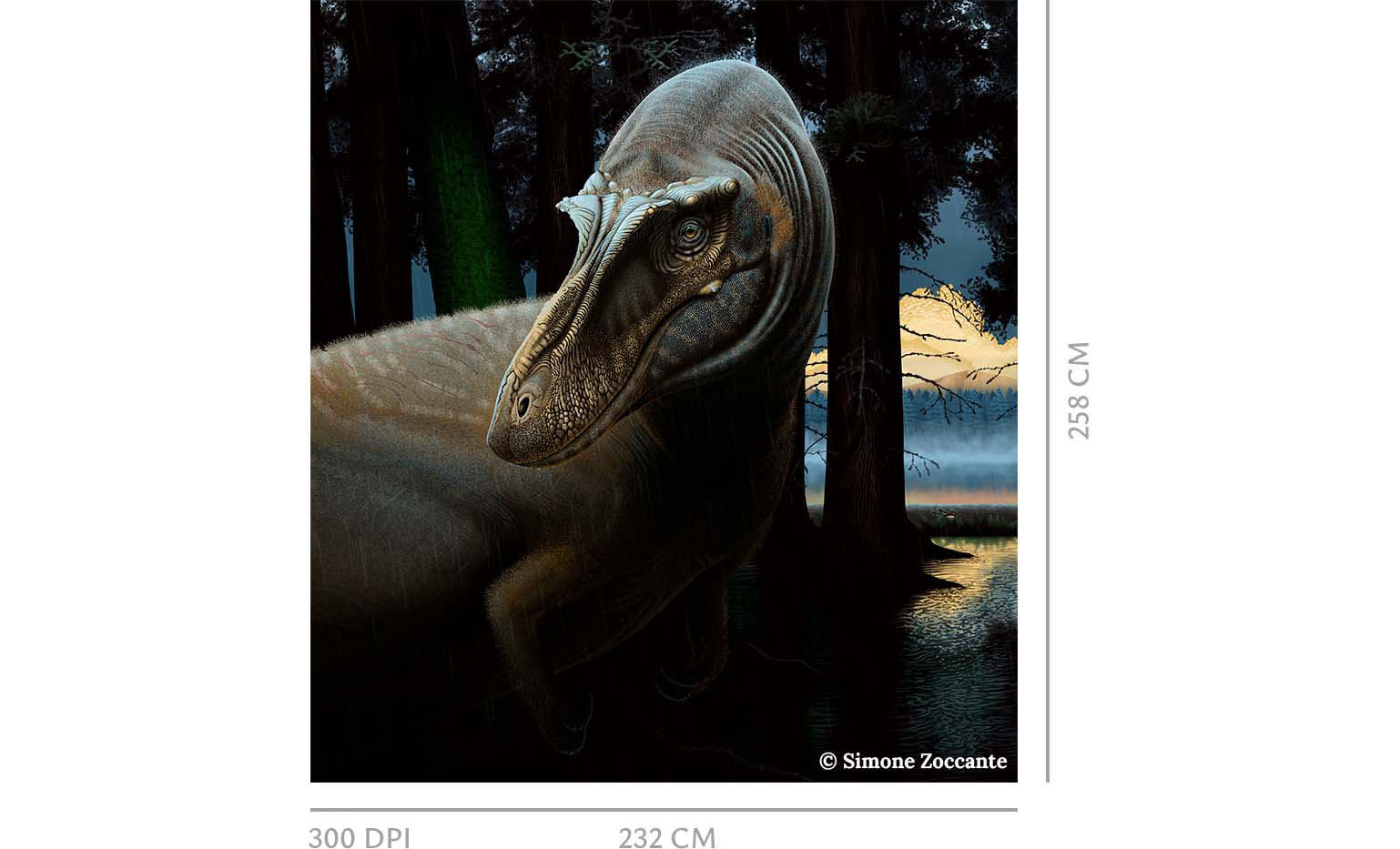
During the creation of this painting, my aim was to give the viewer a thrill; for this reason, I chose to depict an individual of Gorgosaurus libratus (a dinosaur closely related to Tyrannosaurus rex) at life size. For this work, I employed a technique that ensures that whether viewed from a distance or up close, the viewer always experiences the impression of confronting the animal in flesh and bone. For this reason, I titled it “Encounter under the Rain”, as looking at the painting gives the observer the sensation of unexpectedly encountering this large dinosaur during a walk through the forest in the rain.
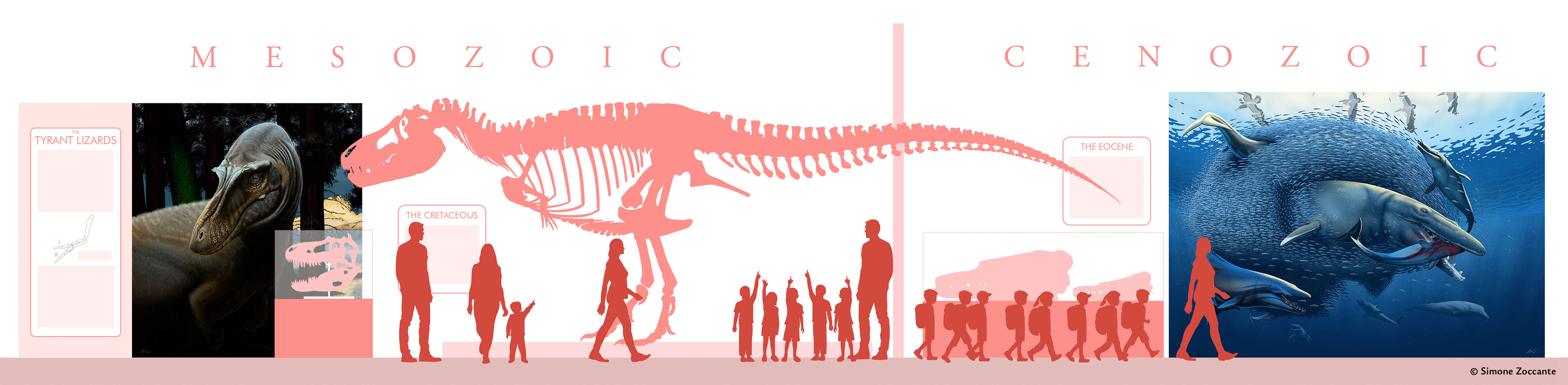
The painting depicts a bust of the subject and was originally designed as a large-format print to accompany fossils of the species within a museum exhibition.
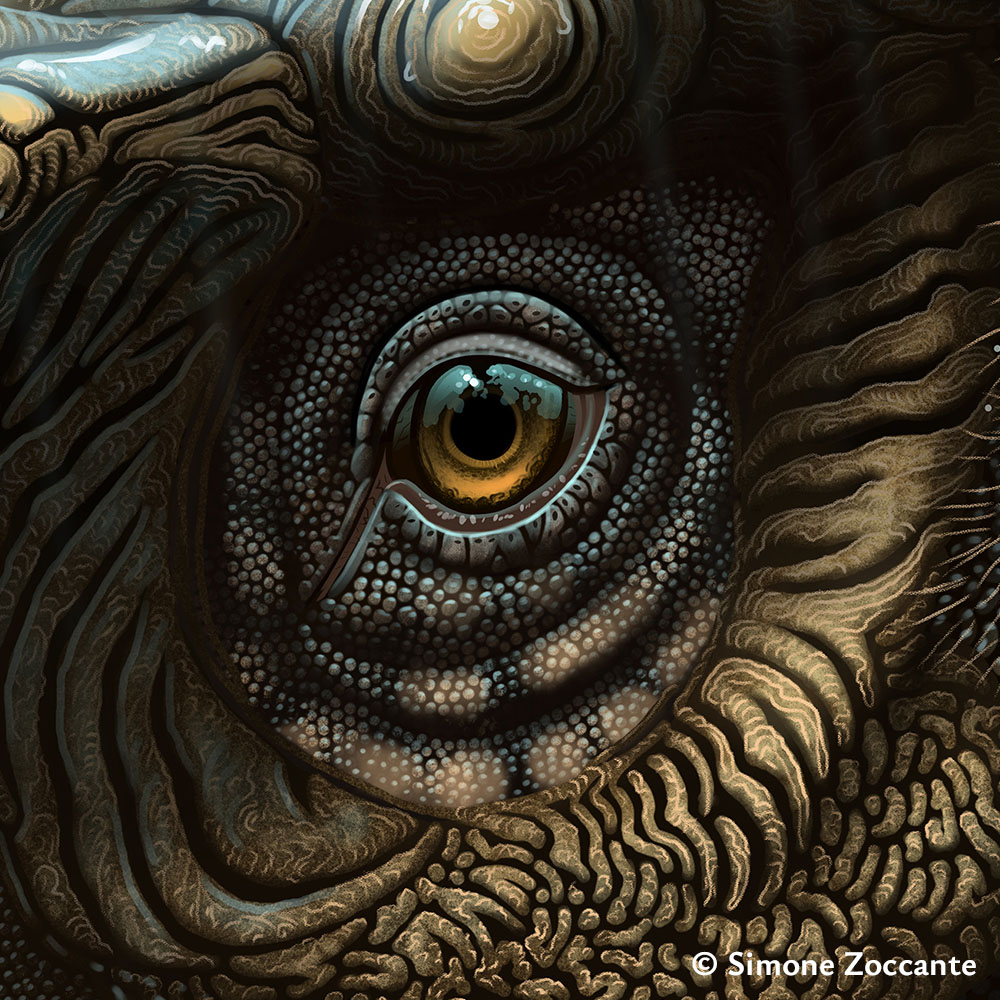

Formation: Dinosaur Park Formation, Canada
Period represented: Late Cretaceous (Campanian), 76,5-74,4 Mya
Animal species represented: Gorgosaurus libratus
If you’re interested in working together, feel free to contact me at simonezoccante@gmail.com. Thank you.
All images © Simone Zoccante 2018-2026.
Please do not reproduce without the written consent of Simone Zoccante.